Boom Barriers
Vehicle access barriers with a lifting boom arm. Servo and brushless DC units open in under a second for toll, commercial and parking entries; the no-spring brushless mechanism removes spring fatigue for low-maintenance residential and campus use.
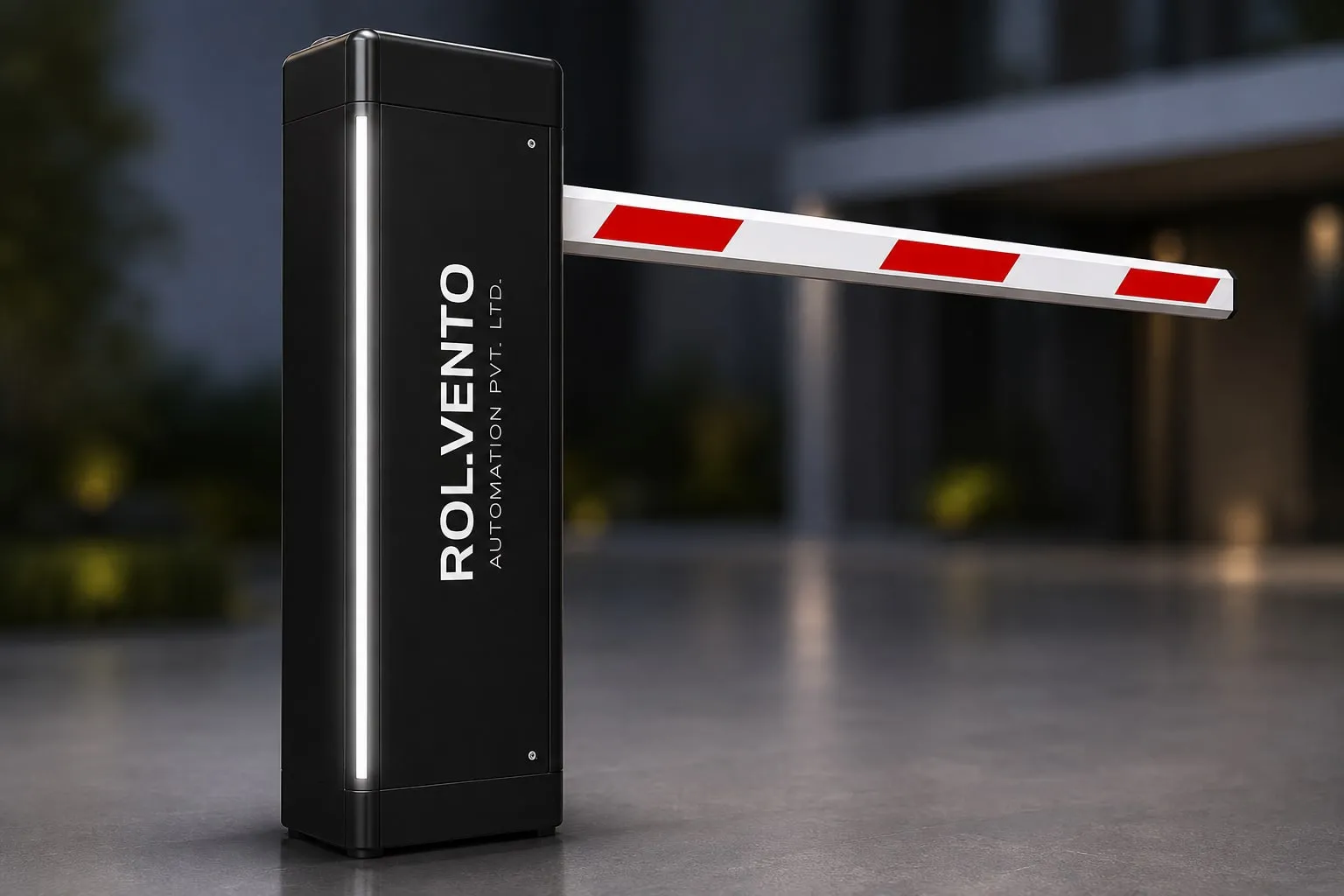
What is a boom barrier?
A boom barrier (barrier gate) is a vehicle access control device that raises and lowers a horizontal boom arm to permit or block passage. It is specified by boom length (m), opening time (s), motor type (servo or brushless DC) and its duty rating (cycles).
Boom Barriers — 3 models
Filter by duty class, or open any model for the complete specification table.
How to choose a boom barrier
- Match the duty rating to traffic. Toll and high-volume commercial lanes justify the 10-million-cycle servo barrier; residential, campus and parking entries are well served by the 5-million-cycle brushless DC units.
- Boom length must cover the lane width with clearance; 3–6 m booms are standard. Longer booms need a slower opening profile.
- Choose the boom type: straight booms for most sites; folding or fence booms where there is limited headroom.
- Specify a vehicle loop detector or photocell so the boom never closes on a vehicle, and a pedestrian gate — barriers are not pedestrian access devices.
- For integration with parking systems, RFID, ANPR or ticketing, confirm the barrier control board offers dry-contact inputs.
Installation notes
- A concrete foundation is cast with conduits for power and control cables; the cabinet is anchored with foundation bolts.
- The boom is fitted to the flange, balanced with the internal spring or counterweight per the manual, and open/closed limits are checked.
- Loop detector cables are cut into the road surface on the approach and safety side of the barrier.
- Control inputs (push button, RFID, loop, photocell) are wired to the board and auto-close timing is set.
- The manual release is tested so the boom can be raised by hand in a power failure.
Installation is carried out by authorised Rollvento dealers and installers. Wiring diagrams and sizing support are available from technical support.
Boom Barriers: common questions
How do I choose a boom barrier?
Start with lane width (boom length), then traffic volume (opening speed and duty rating), then integration needs (loop detector, RFID, ANPR inputs). For toll plazas and busy commercial lanes choose the 10-million-cycle servo barrier; for parking, campuses and residential complexes the 5-million-cycle brushless DC barriers — including the no-spring CSEDZ40 — are usually appropriate.
What does MTBF mean on a barrier gate?
MTBF (mean time between failures) is expressed here as a cycle rating — the number of open/close operations the mechanism is designed for before major service. Higher figures indicate a mechanism intended for continuous high-traffic use.
What is the difference between a servo barrier and a DC brushless barrier?
Both open in about 0.9 s. Servo barriers use a closed-loop servo motor and are rated for 10 million cycles, suiting continuous toll and commercial traffic. DC brushless barriers are rated for 5 million cycles and are available with a no-spring mechanism (CSEDZ40) that eliminates spring fatigue and maintenance.
Does the barrier stop if it hits a vehicle?
Rollvento barriers include auto-rebound obstacle protection: if the boom meets resistance while closing it reverses. A vehicle loop detector or photocell should still be installed so the boom does not start closing while a vehicle is beneath it.
How can we help you?
Tell us what you need to automate — opening size, weight and site — and an engineer will recommend the right model and send a quotation.
- Call+91 99709 28681
- WhatsAppMessage us
- Emailinfo@rollvento.in
- HoursMon – Sat, 9:00 AM – 7:00 PM IST