Swing Gate Motors
Operators for gates that pivot on hinges. Linear screw actuators mount between the pillar and the leaf and suit most residential gates; articulated-arm and heavy-duty operators handle wide pillars and heavier commercial leaves.
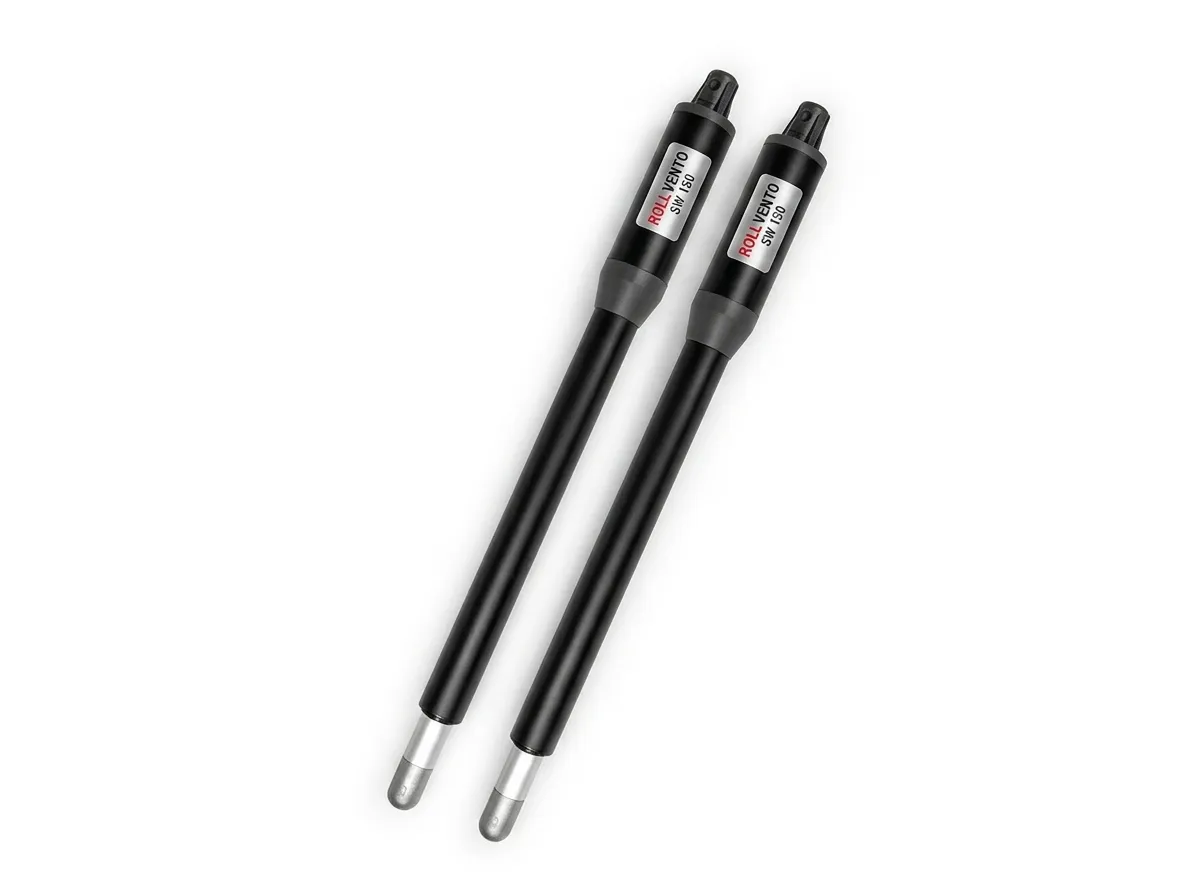
What is a swing gate motor?
A swing gate motor is an operator that rotates a hinged gate leaf open and closed. Linear (screw) actuators push and pull the leaf directly; articulated-arm operators use a jointed arm for gates on wide pillars. Ratings are given per leaf: maximum leaf weight (kg) and leaf length (m).
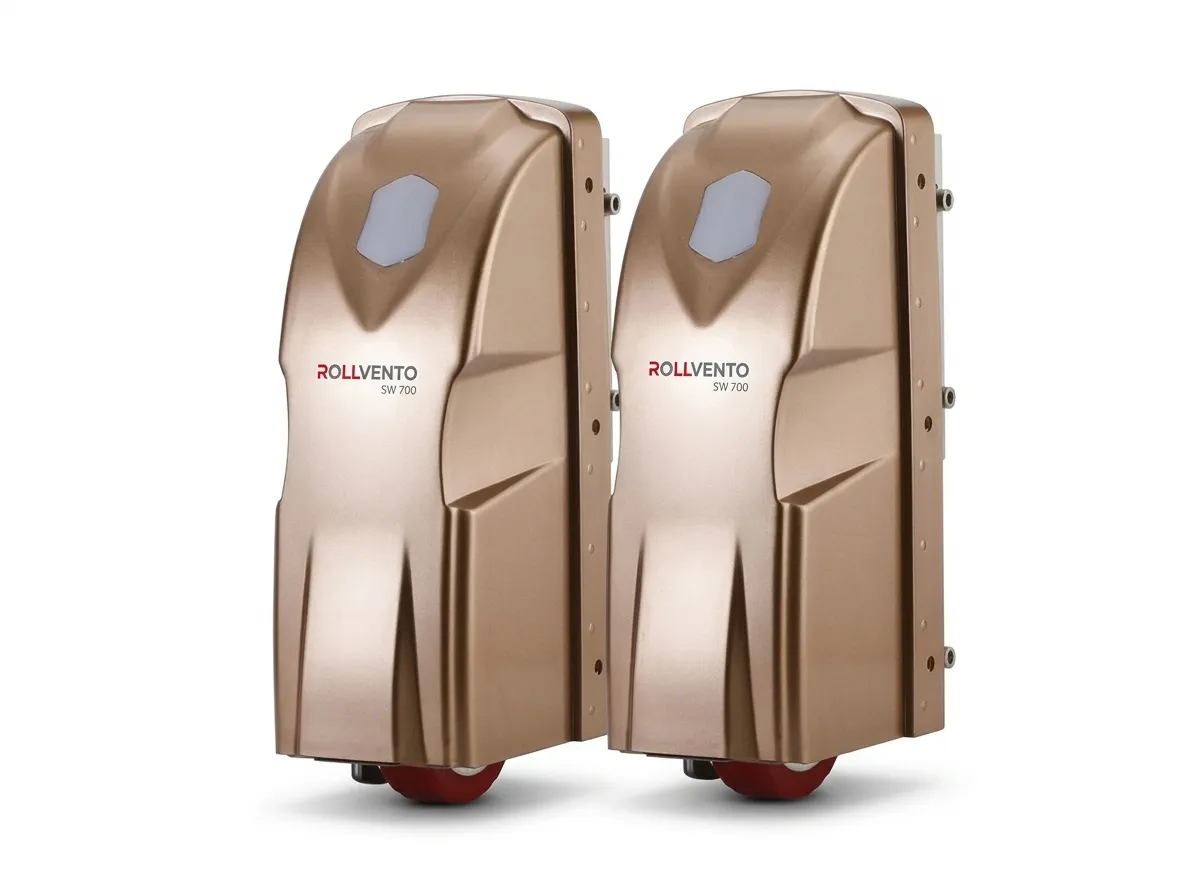
How to choose a swing gate motor
- Rate per leaf, not per gate. A double gate needs two operators, each rated for its own leaf weight and length.
- Measure the pillar. Linear actuators need the hinge close to the pillar face; if the hinge is set back more than ~150 mm, an articulated-arm operator is the better fit.
- Consider wind load on solid (sheeted) leaves — treat them as one capacity class heavier than their weight suggests.
- Specify an electric lock for leaves over 2.5 m or where high security is required; long leaves can be forced open without one.
- Choose 24 V DC for battery backup, soft start and safe low-voltage operation on residential sites.
Installation notes
- Bracket positions are set from the manufacturer’s geometry table (A/B dimensions) so the actuator reaches full stroke at 90° without binding.
- Actuators are fitted to the pillar bracket first, then to the leaf bracket with the gate closed.
- Mechanical stops are fitted in the ground at the open and closed positions.
- The control board learns leaf travel, sets slow-down zones and obstacle sensitivity, and configures leaf delay so overlapping leaves close in the correct order.
- Photocells are installed on both sides of the opening; the release key is tested with the power isolated.
Installation is carried out by authorised Rollvento dealers and installers. Wiring diagrams and sizing support are available from technical support.
Swing Gate Motors: common questions
What is the difference between sliding and swing gate automation?
A sliding gate moves sideways along a track or cantilever and needs space beside the opening; it is driven by one rack-and-pinion motor. A swing gate pivots on hinges and needs clear space to swing; each leaf has its own operator. Sliding gates suit sloped driveways and limited swing space; swing gates suit level ground where lateral space is limited.
How heavy a leaf can a linear actuator move?
Rollvento SW-series linear actuators are rated for leaves from 200 kg to 400 kg with leaf lengths up to about 2.0–3.0 m depending on model. Heavier leaves up to 600 kg use the PK series. Always check both the weight and the length limit.
Do I need an electric lock?
For leaves longer than about 2.5 m, or where the gate must resist forced entry, yes. Electromechanical actuators hold the leaf closed but a lock adds a positive mechanical bolt at the meeting stile.
Can swing gate motors open outward?
Yes. Both linear and articulated operators can be configured for inward or outward opening, but outward opening requires the correct bracket geometry and clearance to the road. Confirm the opening direction at the sizing stage.
How can we help you?
Tell us what you need to automate — opening size, weight and site — and an engineer will recommend the right model and send a quotation.
- Call+91 99709 28681
- WhatsAppMessage us
- Emailinfo@rollvento.in
- HoursMon – Sat, 9:00 AM – 7:00 PM IST